Let’s Talk About “Spanish Short Stories For Beginners” Can 10 Stories Actually Kickstart Your Language Journey?
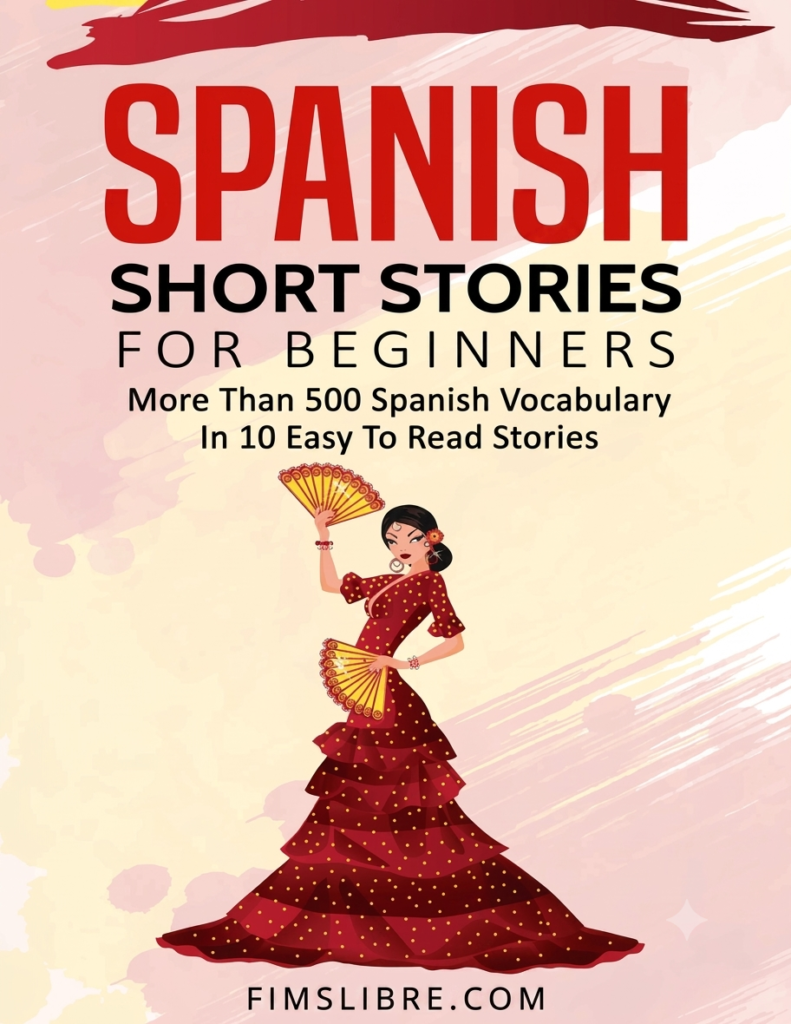
If you’ve ever tried picking up a new language, you know the absolute dread of staring at grammar tables. It’s mind-numbing. So when I picked up Spanish Short Stories for Beginners—the one featuring the flamenco dancer with the yellow fans on the cover—I wanted to see if it actually offers a sanity-saving alternative. The cover claims it packs over 500 essential vocabulary words across 10 “easy to read” stories. Honestly, language books make these promises all the time, so I went into it with a healthy dose of skepticism, wondering if it’s actually readable or just another glorified dictionary disguised as fiction.
To be fair, the presentation is quite inviting. It doesn’t look like a dry, institutional school textbook. But as anyone who has struggled through basic “Hola, ¿cómo estás?” templates knows, the real test is whether the stories can actually hold your attention long enough to make the words stick in your brain without forcing you to look up a definition every three seconds.
What is this little book trying to achieve?
The core concept here is learning through immersion, but on training wheels. Instead of throwing you into complex Spanish literature, the book offers ten self-contained narratives written in simplified, everyday language. The whole idea is to get you comfortable with contextual reading.
I feel like the author targets that frustrating intermediate-beginner phase—where you know a handful of nouns but can’t follow a natural conversation. By wrapping the target vocabulary inside actual narratives, the book aims to show you how sentences actually breathe and function in real life, rather than just forcing you to memorize isolated flashcards.
The Bits and Pieces Inside
Flipping through the chapters, the breakdown is fairly straightforward, though a bit uneven in places. Here’s what you actually deal with:
- 10 Structured Stories: They cover different casual, real-life scenarios. They aren’t high-stakes thrillers, but they handle everyday situations like traveling, meeting people, or dining out.
- Bolded Key Vocabulary: Within the text, specific terms are bolded so your eyes catch them naturally. It helps you recognize the core 500+ words the book wants you to absorb.
- Post-Story Summaries and Lists: After each story, there’s a vocabulary breakdown. I don’t know why, but I found these lists more helpful than the built-in translation guides because they let you test your memory right after reading.
What you actually get out of it
By the time you finish the last story, you won’t magically become fluent—let’s be real about that. But what you *do* get is a genuine sense of rhythm. You start realizing how past tense verbs slide into sentences, and you learn to stop translating every single word in your head.
It builds a strange kind of confidence. When you figure out what a sentence means just by reading the context around an unfamiliar word, it feels like solving a miniature puzzle. That small hit of dopamine does way more for language retention than standard rote learning ever could.
Who should actually pick this up?
This is tailor-made for self-directed learners who already know basic Spanish phrases but get completely paralyzed when trying to read actual paragraphs. It’s great for casual app users (the Duolingo crowd) who want to transition into reading real books.
However, if you are a literal day-one beginner who doesn’t even know how to say “the dog” or “good morning,” this will probably just frustrate you. You need a tiny foundation first. Also, if you’re looking for complex, deeply emotional plotlines, keep moving—these stories are simple, pragmatic tools, not literary masterpieces.
My Honest Opinion: The Good and the Boring
Let’s talk about where this book succeeds and where it kind of drops the ball.
🟢 What I liked:
The layout is wonderfully low-stress. The stories are genuinely short—you can easily finish one during a quick coffee break. I loved that the vocabulary felt highly practical. It focuses on the kinds of words you actually need if you’re trying to navigate a real street or talk to an actual human being, rather than obscure literary terms you’ll never use.
🔴 What annoyed me:
Honestly, the stories can be incredibly dry. They feel heavily engineered to fit specific vocabulary lists, which means the plots are pretty basic and sometimes a bit predictable. A few transitions between sentences feel slightly unnatural because the text is trying so hard to keep the grammar simple. It occasionally lacks the messy, organic flow of real-world speech.
To be fair, though, you aren’t buying this for the plot twists. You’re buying it to bridge the gap between knowing words and actually understanding sentences, and on that front, it gets the job done decently well without making your brain melt.
Final Note
“At the end of the day, Spanish Short Stories For Beginners is a solid, unpretentious tool. It won’t give you instant fluency, but it provides a gentle, practical ladder out of the beginner’s vocabulary hole. Keep your expectations grounded, tackle a story at a time with a notebook nearby, and you’ll find it’s a completely worthwhile addition to your learning routine.”
📥 How to Download This Book
Click the button below to download this ebook in PDF format.
📚 Related Books
Easy German Dialogues Practice for Beginners Book
View Book →
Goethe Zertifikat Pruefung C2 Grosses Deutsches Sprachdiplom Modellsatz
View Book →
German Short Stories:9 Simple And Captivating Stories Book
View Book →
Spanish Short Stories for Beginners Book 1
View Book →
501 Spanish Verbs Book
View Book →Join Our Facebook Learning Groups
🇩🇪 Learn German Free 🇬🇧 English Learning Group 🇪🇸 Spanish Learning GroupJoin our educational Facebook communities to improve your language skills, practice daily conversations, and connect with learners from around the world.